By jessicad on January 27, 2013
The nice thing about being part of my team, Flying Moccasins, is how I can walk wherever I am on Turtle Island (Canada) even if I’m not physically with them. Just recently I braved the cold in Ottawa for only one day where it was -35 degrees Celsius with the windchill. I even resorted to walking backwards to protect my face from the fierce winds. Instead of enjoying the comfort of staying indoors, I walked 7000 steps across downtown Ottawa and stopped off at various coffee shops to warm my toes. While I was flying on my moccasins my thoughts were with one of the participating Northern communities, Kaska Dena Nation (Lower Post, BC), who also has a walking team! I quickly checked the weather report and it was a bone chilling cold of -36 degrees Celsius there.
If you have any team stories or posts you would like to on the Home Page News, please email us at: walkabout.ubc@gmail.com. We would love to hear from you!
Sincerely,
Flying Moccasin Member ~ Jessica Dunkley, Graduate Academic Assistant for the 2013 UBC Walkabout Tour

Posted in Home Page News
By jessicad on January 27, 2013
Did you know that some of the oldest mocassins can be found in European museums? There are many different styles, but the sensible shoe has persisted as the most common style. The word, Moccasins, come from the Algonkian language family, possibly from Montagnais which is located in Eastern Canada/USA.
There are two types of soles; soft and hard soles. The soft-soles were almost exclusively found in the East which is made from a single piece of hide. At the time, they were common gifts to the Europeans officers and colonial administrators. It was the design of the moccasins that determined the prized value of it.
More facts about moccasins can be found at Six Nation Polytechnic Indigenous Knowledge Centre – Hodinohso:ni Art Lessons at: www.snpolytechnic.com/pdf/6%20Haudenosaunee%20Arts%20Moccasins.pdf
Posted in Home Page News
By jessicad on January 21, 2013
Check out Self-Guided Walks in the Vancouver area for a few suggestions for those of you who would like to walk through some parks located on Indigenous territories. The self-guided walk page is located under the Upcoming Events tab and will be updated regularly.
Posted in Home Page News
By jessicad on January 20, 2013
How would you like to listen to some songs by Indigenous singers as you go for your daily walk? Here is a compilation of songs shared by renown Indigenous singers in support of the vision of Idle No More, Indigenous and allies.
http://rpm.fm/music/download-idle-no-more-songs-for-life-vol-1/
Posted in Home Page News
By jessicad on January 14, 2013
We’re two days away from our Kick-off Event at Scarfe 310 on January 16th, from 12:30pm-2:00pm! This will be a fun filled event with a wonderful video montage, giving you a sneak peak of what awaits your teams for the tour, starting on January 21st. We now have over 60 participating communities, museums, schools and organizations on our tour!
Posted in Home Page News
By jessicad on January 11, 2013
We now have a category, Indigenous Resources, found under the “Visiting Communities” tab where you can learn more about languages, grassroot movements and projects in BC & Canada. For example, the Truth and Reconciliation Commission of Canada and language resource, FirstVoices, can be found there.
Posted in Home Page News
By jessicad on December 14, 2012
Posted in Home Page News
By jessicad on December 14, 2012
This is a question that comes up frequently. There is a large array of terminology that is used to describe Indigenous people. With the Year of Indigenous Education, I thought I would share how a well-known Indigenous author, Linda Tuhiwai Smith in her book “Decolonizing Methodologies”, describes what “Indigenous people” means.
This term is relatively new and it came out in the 1970’s from the American Indian Movement and the Canadian Indian Brotherhood. It ‘internationalizes the experiences, the issues and the struggles of some of the world’s colonized peoples’ (Wilmer 1993). It signifies the right of people to self-determination (Smith 1999). It also brings together communities and people who have experienced colonization to learn from one another and work towards self-determination (Smith 1999).
Linda Smith’s book “Decolonizing Methodologies” is an excellent book for academics and researchers who are interested in working in indigenous context and serves as an excellent resource to help us learn about the intricate history, politics and cultural issues.
Jessica ~ Graduate Academic Assistant – 2013 Walkabout Tour
Posted in Home Page News, Uncategorized | Tagged Indigenous people
By jessicad on November 6, 2012
We are pleased to showcase Hooksum Outdoor School as one of many places we will be visiting on our tour! Please visit the tab ‘Visiting Communities’ to learn more about them.
Posted in Home Page News | Tagged Hooksum Outdoor School
By Sharon Hu on October 24, 2012
Learn a language here.
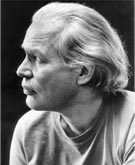
Photo credit: Bill Reid Gallery
Posted in News And Events, Slideshow